
Made in the UK from 100% recycled polypropylene
X-Grid solution
X-Grid confines angular aggregate within a robust cellular structure, helping reduce migration, rutting and maintenance while retaining a free-draining finish.
Gravel stabilisation
Bare gravel has two failure modes, and both start with movement. A wheel rolling across loose stone shoves it forwards and sideways, so gravel migrates to the edges of the surface and into the next doorway; and rain carries it downhill until the sub-base is exposed. What remains works its way down into soft ground, and the ruts you are re-levelling every spring appear.
Confinement removes both mechanisms at once. In an X-Grid cell, each piece of 10–20 mm angular gravel is held on all sides by the panel walls and by the stone around it, so a tyre pressing on the surface loads the cell walls rather than displacing the stone. The angular faces key against the walls and against each other, which is why angular stone works and rounded pea shingle does not: round stones roll against each other no matter how tightly they are packed.
The result is a surface that stays level, stays permeable and stays where it was put. The grid does not remove the need for a designed build-up — a compacted sub-base, an edge restraint and the right fill depth are still what carry the traffic — but it does remove the constant re-grading that makes loose gravel surfaces so expensive to keep looking finished.
Get the details right
The grid is one layer in a construction, and the layers beneath it decide whether the surface stays firm. Under the panels goes a compacted free-draining sub-base — published guidance starts from 150 mm of MOT Type 1 or Type 3 for cars and light vehicles, confirmed against ground conditions and the heaviest vehicle that will ever use the surface. A geotextile separates the stone from soft ground where the two could intermix, a 5–10 mm sharp-sand bedding lets the panels bed flat without rocking, and a substantial edge restraint surrounds everything — gravel surfaces fail at the perimeter first, and the edge is what stops the whole construction creeping sideways under braking wheels.
The fill discipline matters as much as the layers. Use clean, well-graded 10–20 mm angular aggregate — the sharp faces key against the cell walls, which is why rounded pea shingle will never lock. Fill the cells flush and overfill slightly, sweep surplus stone off surrounding surfaces, and compact the sub-base before the panels go down rather than on top of a filled grid. After the first proper rainfall, walk the surface and confirm the falls still shed water as designed.
Be equally clear about where gravel stabilisation is the wrong answer. Ground that is soft, wet or untested should be investigated before materials are ordered, because no panel compensates for a formation that pumps. Regular HGV or plant traffic needs an engineered sub-base sized for real axle loads, not a guide default. And steep gradients change both the drainage design and the way fill creeps downhill, so they deserve a technical review before you commit.
Inside those limits, upkeep is almost boring: an occasional rake to redistribute the stone that shoes and tyres shift, and a top-up of the cells every few years as the fill settles. That is the entire maintenance schedule — and the reason a confined gravel surface costs far less to keep looking finished than a loose one that is re-graded every spring.
In use
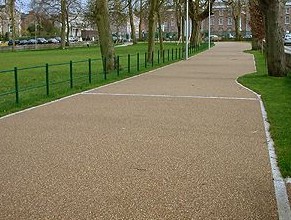
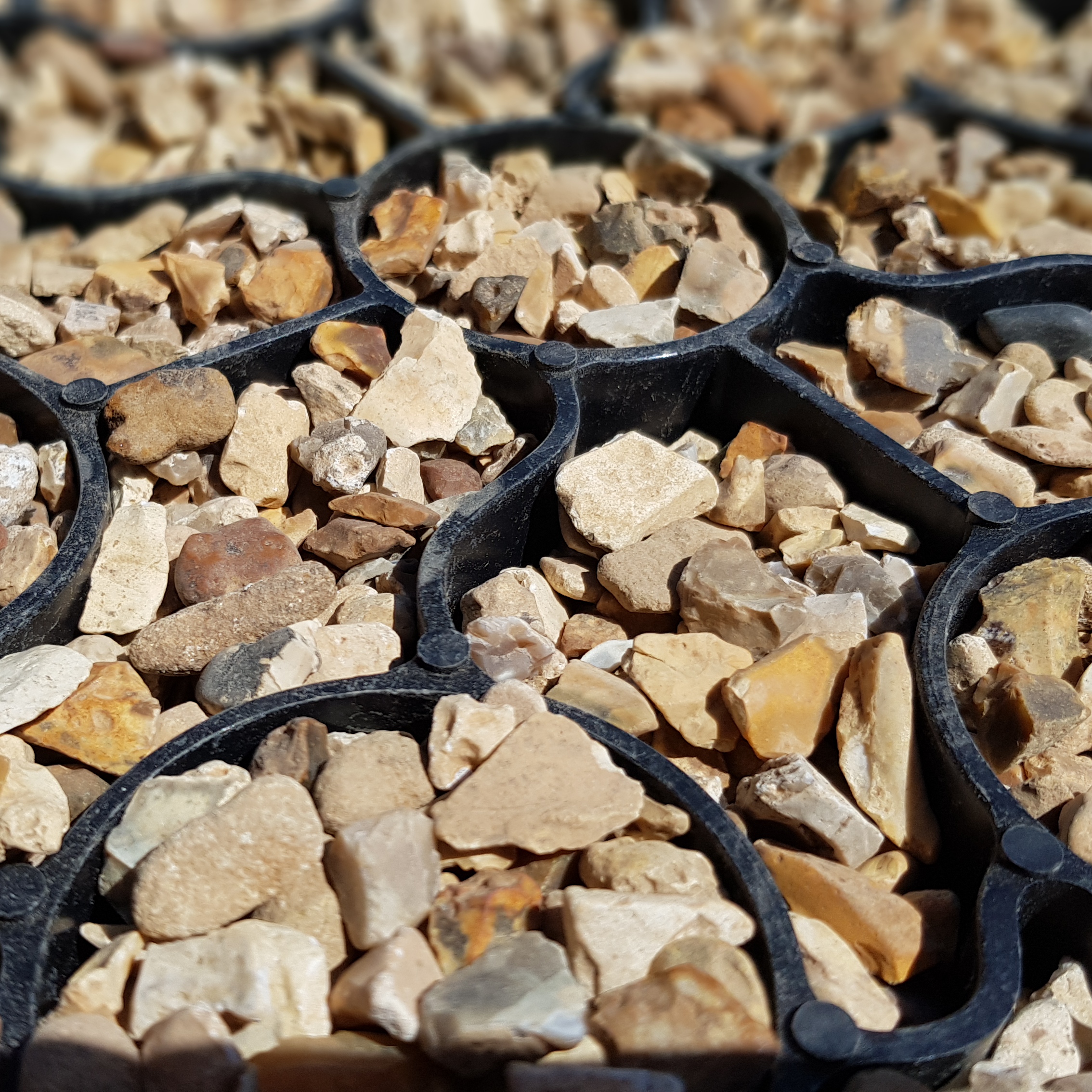
Typical uses include paths, landscapes, car parks and access routes. The final design must reflect site drainage, subgrade strength, slope and vehicle movements.
Use 10–20 mm angular gravel over a correctly prepared, restrained and permeable construction.