
Made in the UK from 100% recycled polypropylene
X-Grid
Start with the way the surface will be used, then match the build-up to the heaviest expected traffic and site conditions.
Start here
Almost every project comes down to one decision before any layer is designed: should the finished surface be gravel or grass? Both use the same X-Grid panel and the same build-up logic, so the choice is about how the surface will live, not about engineering.
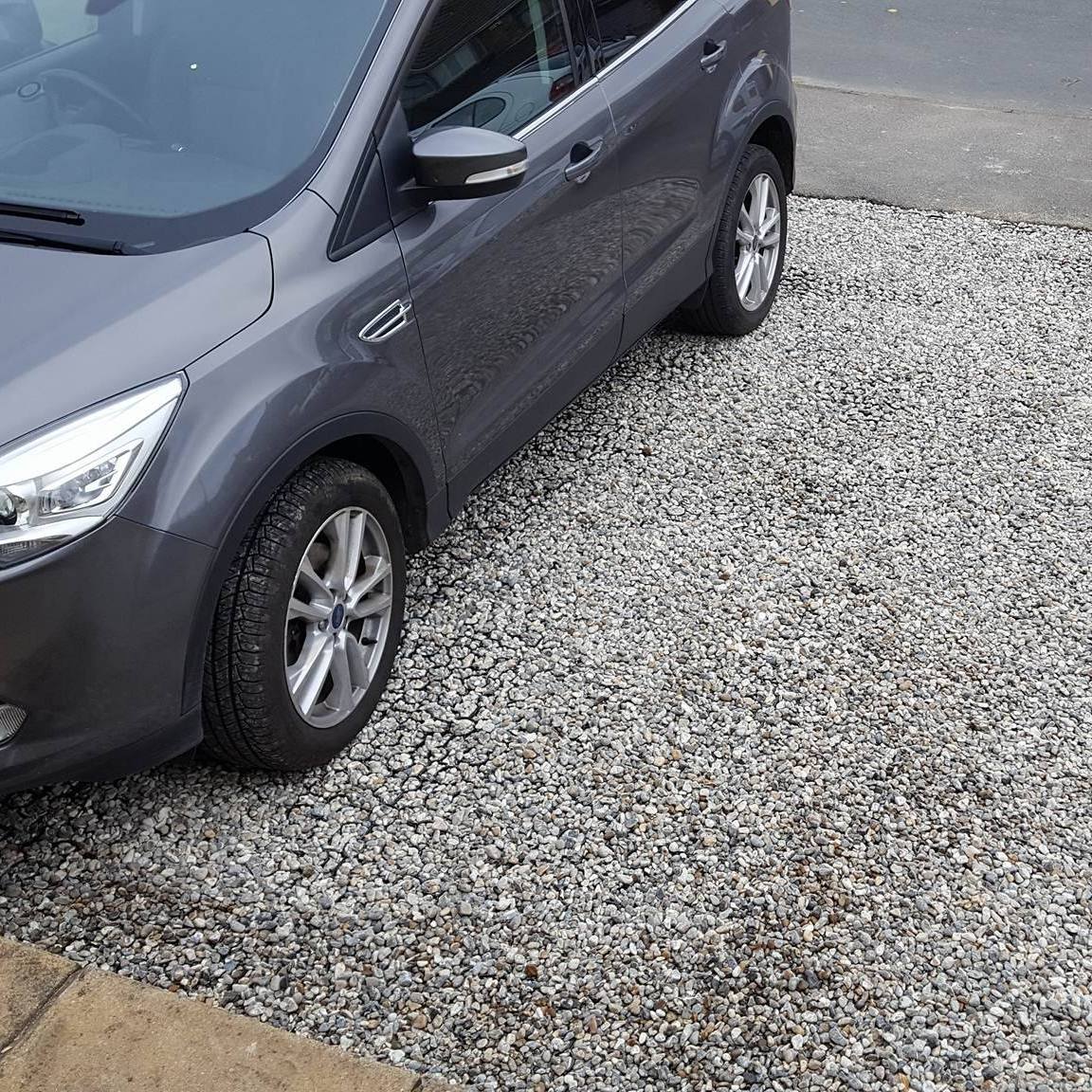
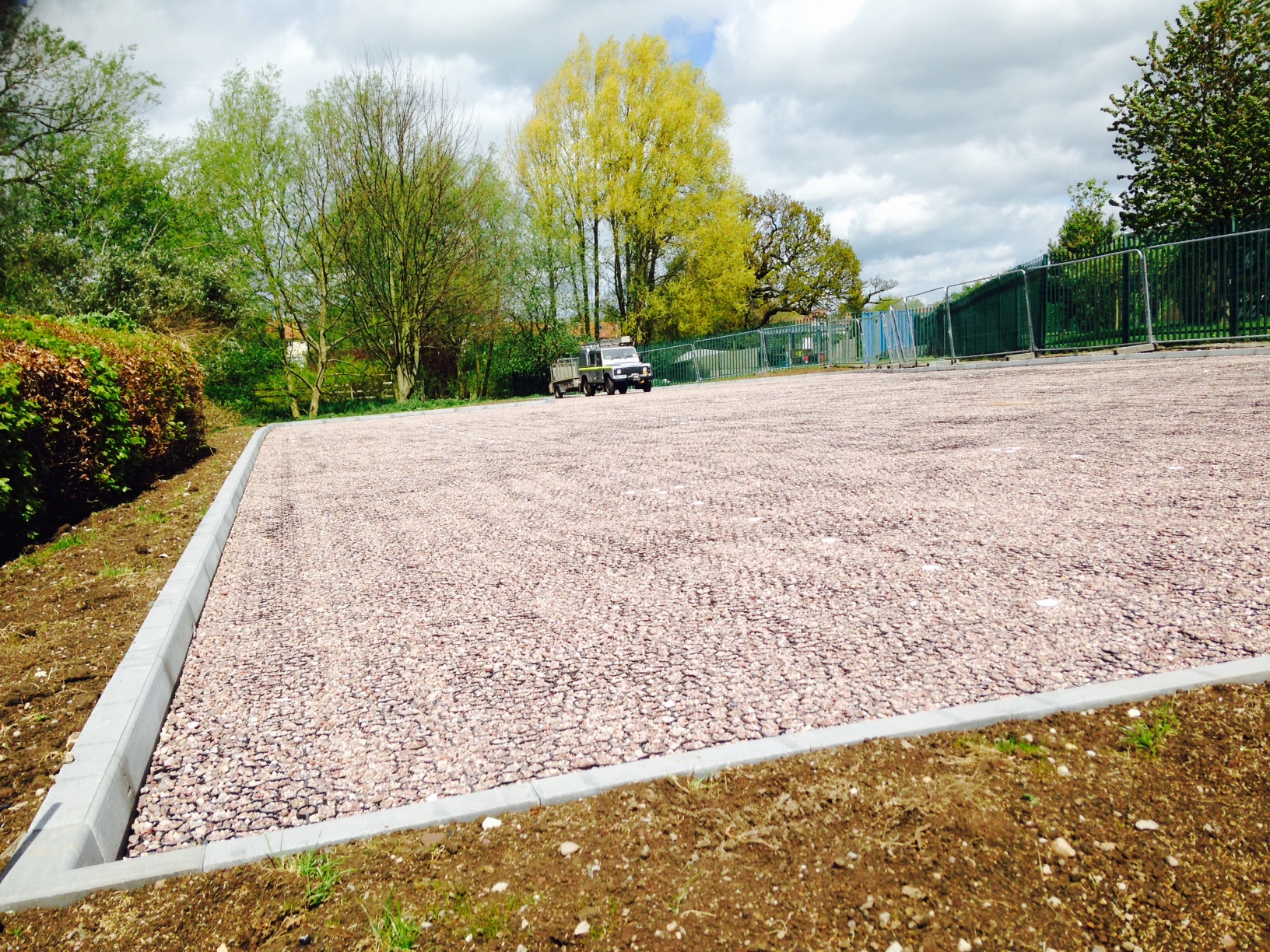
Choose gravel when the surface is used every day, when a hard-wearing all-weather look matters, or when the ground is already compacted and you want the lowest-maintenance option. Gravel bays shake down quickly, shrug off repeated parking, and read as a “finished” surface next to buildings. Choose 10–20 mm angular stone, keep it overfilled, and expect occasional raking — that is the entire maintenance schedule.
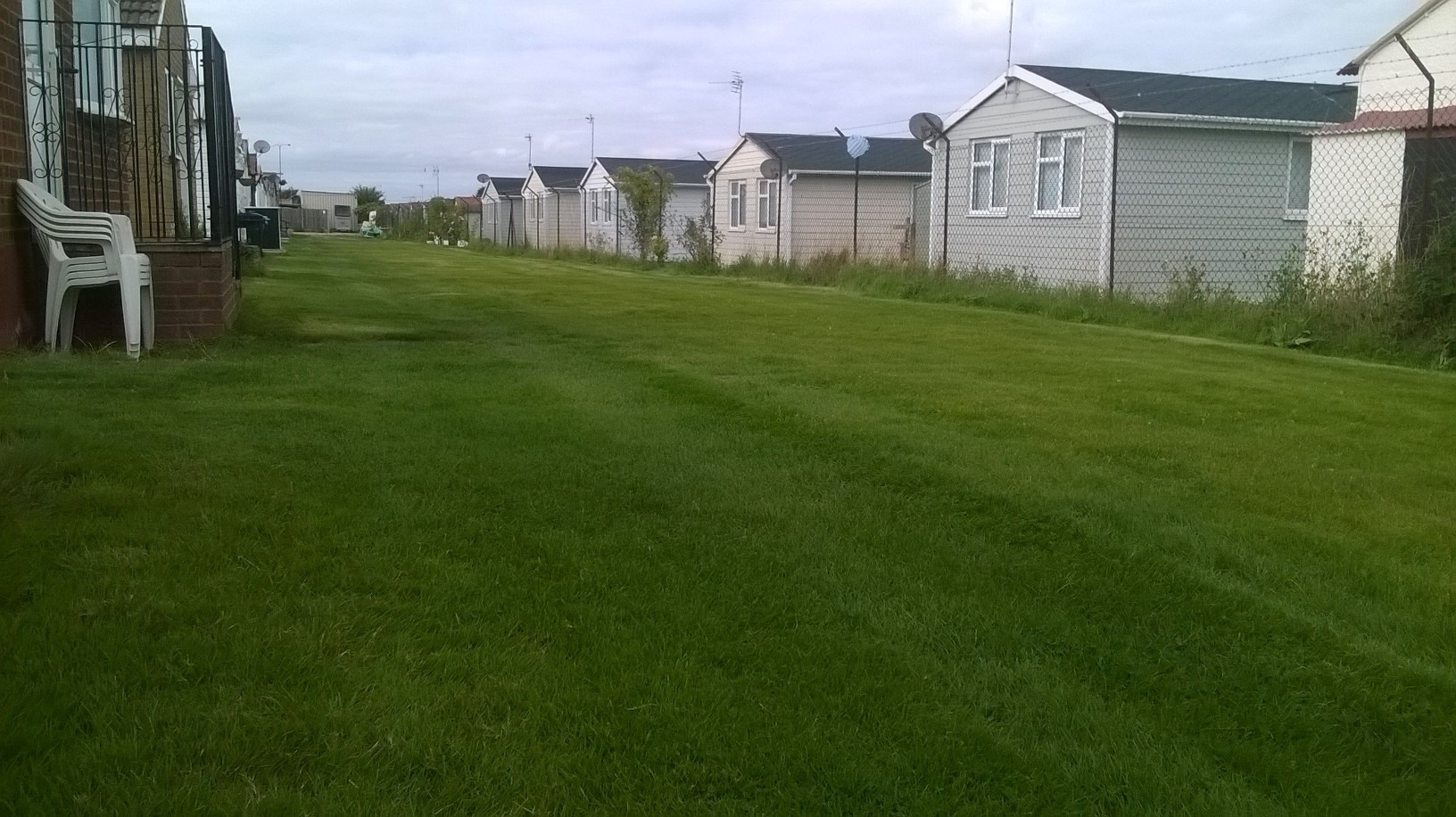
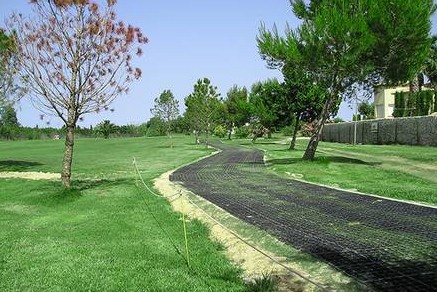
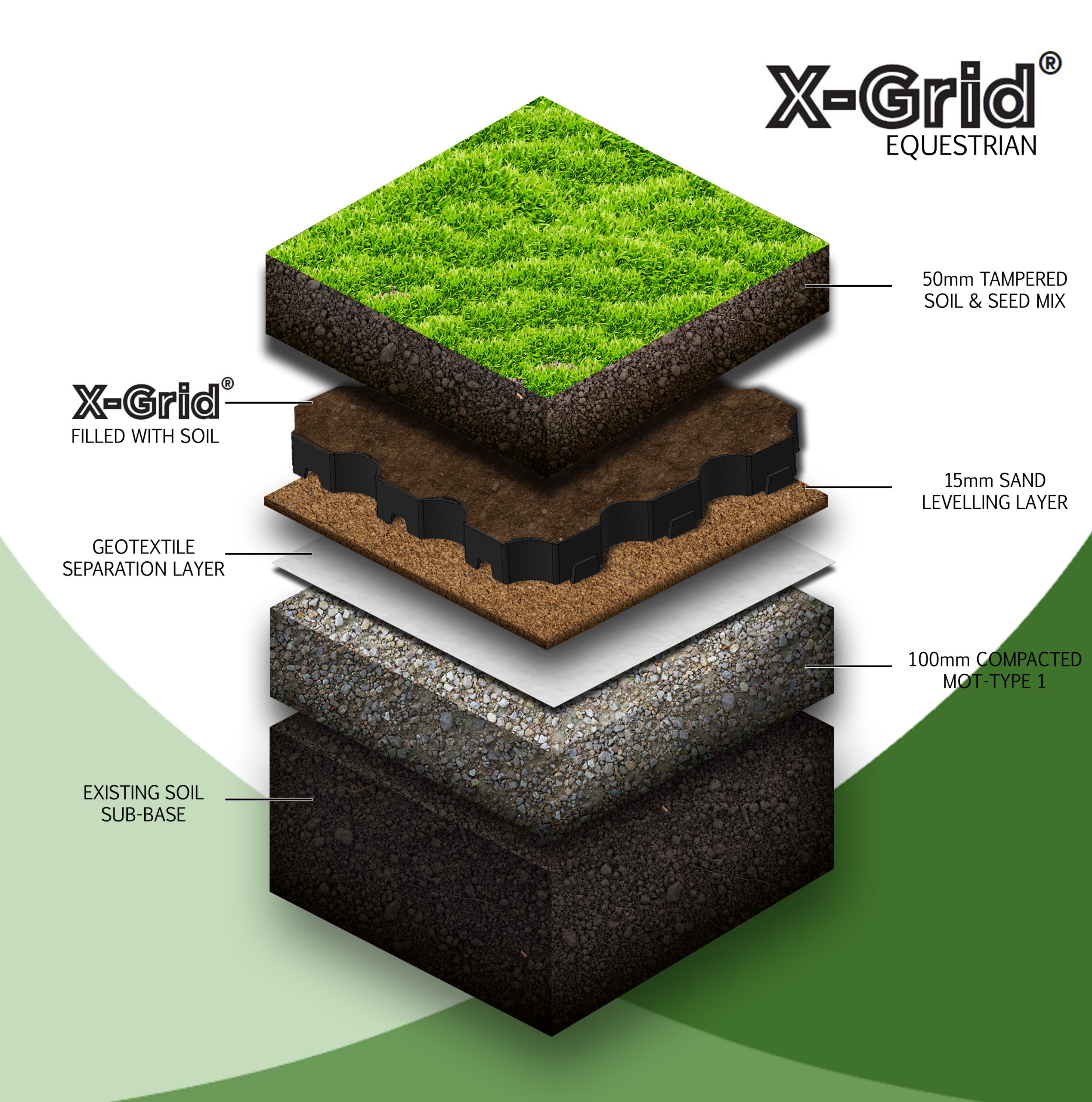
Choose grass when the surface must stay green: overflow parking that is used a few days a month, campsite pitches, amenity land where hard-standing would spoil the setting, or routes that must be mown. Grass-filled panels need establishment time — keep vehicles off until the roots have taken — and suit seasonal or occasional traffic better than daily heavy use.
Two honest caveats apply to both. Daily HGV or plant traffic calls for an engineered sub-base designed for the loads, whichever finish you pick; and on ground that is soft, wet or untested, get the build-up designed before you order materials. The nine application pages below carry the specific guidance for each use.
Browse by use
Stable, permeable domestic driveways that keep decorative gravel in place.
Gravel or grass parking bays, overflow areas and circulation routes.
Evidence
What changes
Nine application pages sound like nine different products. They are not. The panel is the same, the interlock is the same and the drainage principle is the same; what changes is the ground it is laid on and the traffic it has to carry. A domestic driveway built for a family car and a farm yard built for a loaded trailer may look identical once the gravel is down, and their sub-bases will be nothing alike. That is why each application page leads with the load case and the ground, then the finish.
Read them as a set of worked examples rather than a menu. The driveway page shows the lightest case and the most common mistake — too little sub-base under a surface that will take two tonnes every day. The agricultural and access-route pages show the opposite: heavy, repeated and sometimes tracked loads, where the sub-base is designed first and the grid confines and drains the surface above it. The equestrian, golf and campsite pages sit between, where the traffic is seasonal or light but the ground is often soft and the finish has to stay green or tidy.
Getting it right
Two inputs decide every application’s build-up: how much load the surface will take, and what the ground underneath is doing. If you can answer those, the matching application page gives you the layers directly. If the ground is soft, variable or made-up, or the load is heavier than the page assumes, the general guidance stops being enough and the specification needs reviewing — which is exactly the point the technical team exists for.
A useful habit is to read the application page alongside the installation guide. The application page tells you what the surface is for; the installation guide tells you the order to build it and the approval points at which to stop and ask. Together they cover the whole job, and anything they leave open is a question worth sending before materials arrive.