Made in the UK from 100% recycled polypropylene
The X-Grid system
A robust, open-cell panel for creating stable gravel or reinforced grass surfaces while preserving permeability through the construction.
How it works
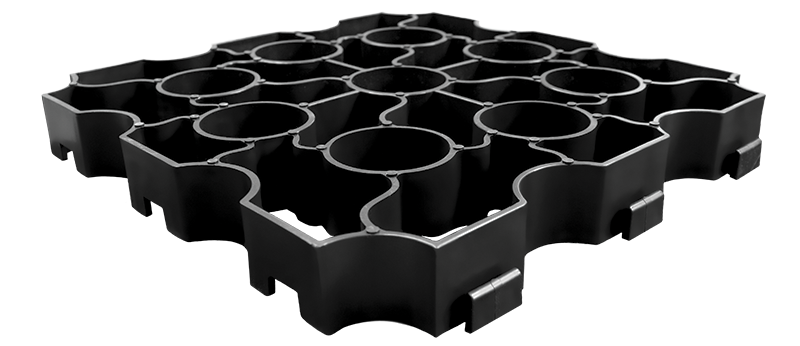
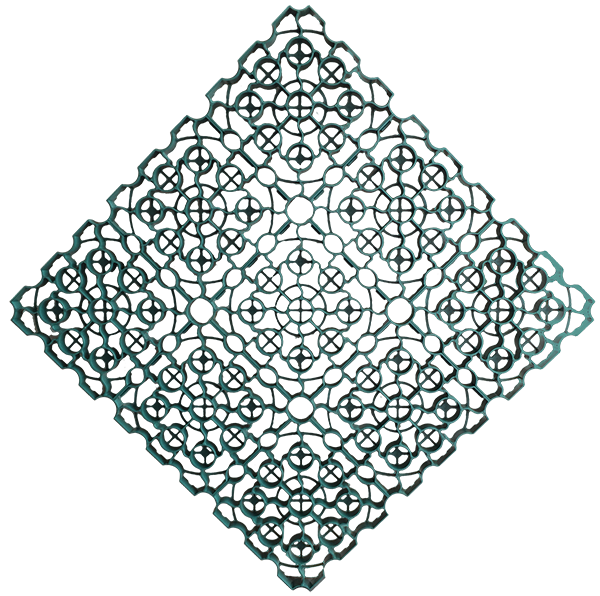
Each X-Grid panel is a lattice of 330 × 330 mm cells, 40 mm deep, moulded from recycled polypropylene with 3 mm walls. Two edges carry slots and two carry pegs: as panels are laid, each peg swings into its neighbour’s slot and the run becomes one continuous mat. Nine panels cover a square metre, and a panel weighs about 0.57 kg, so two people can lay a driveway-size area in minutes without plant.
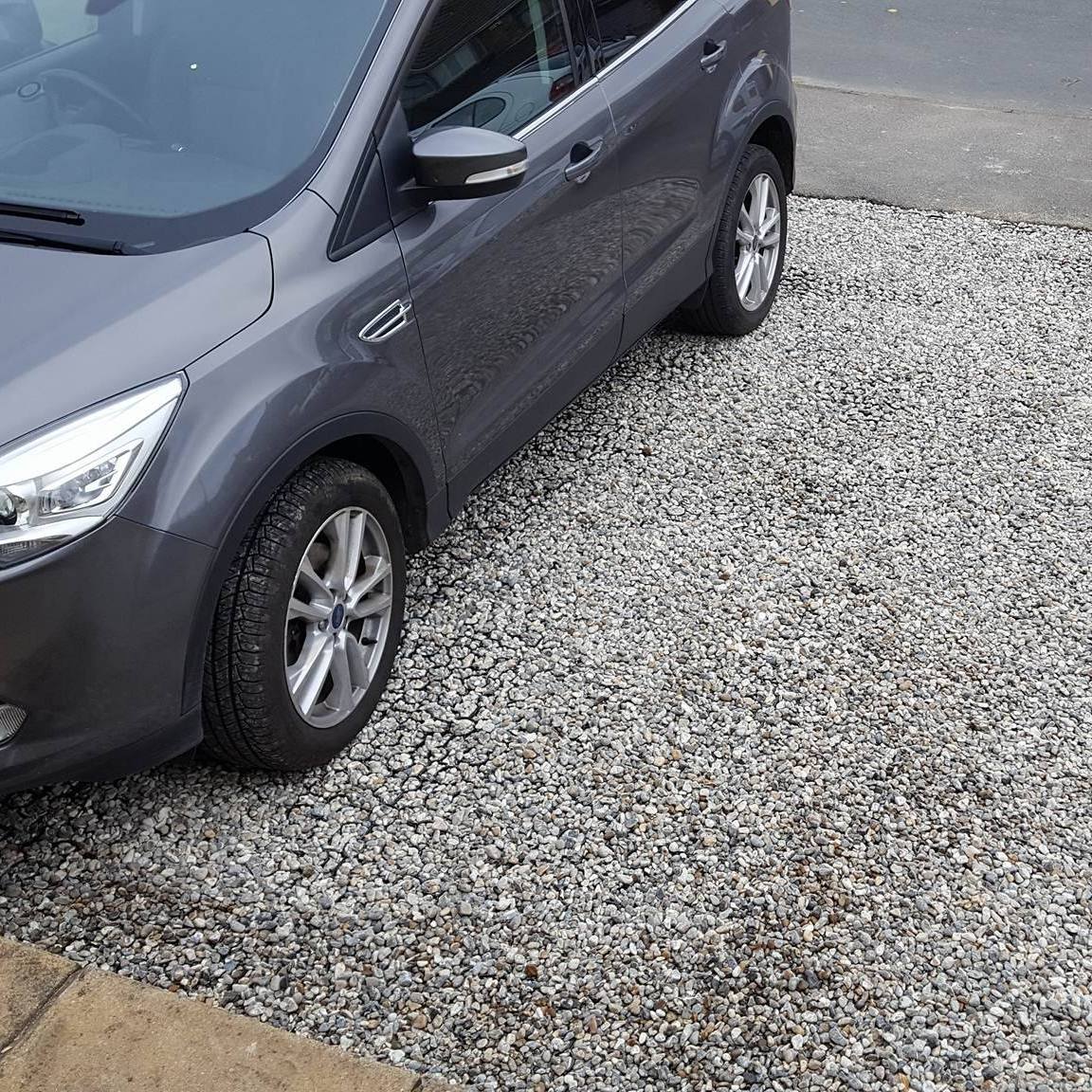
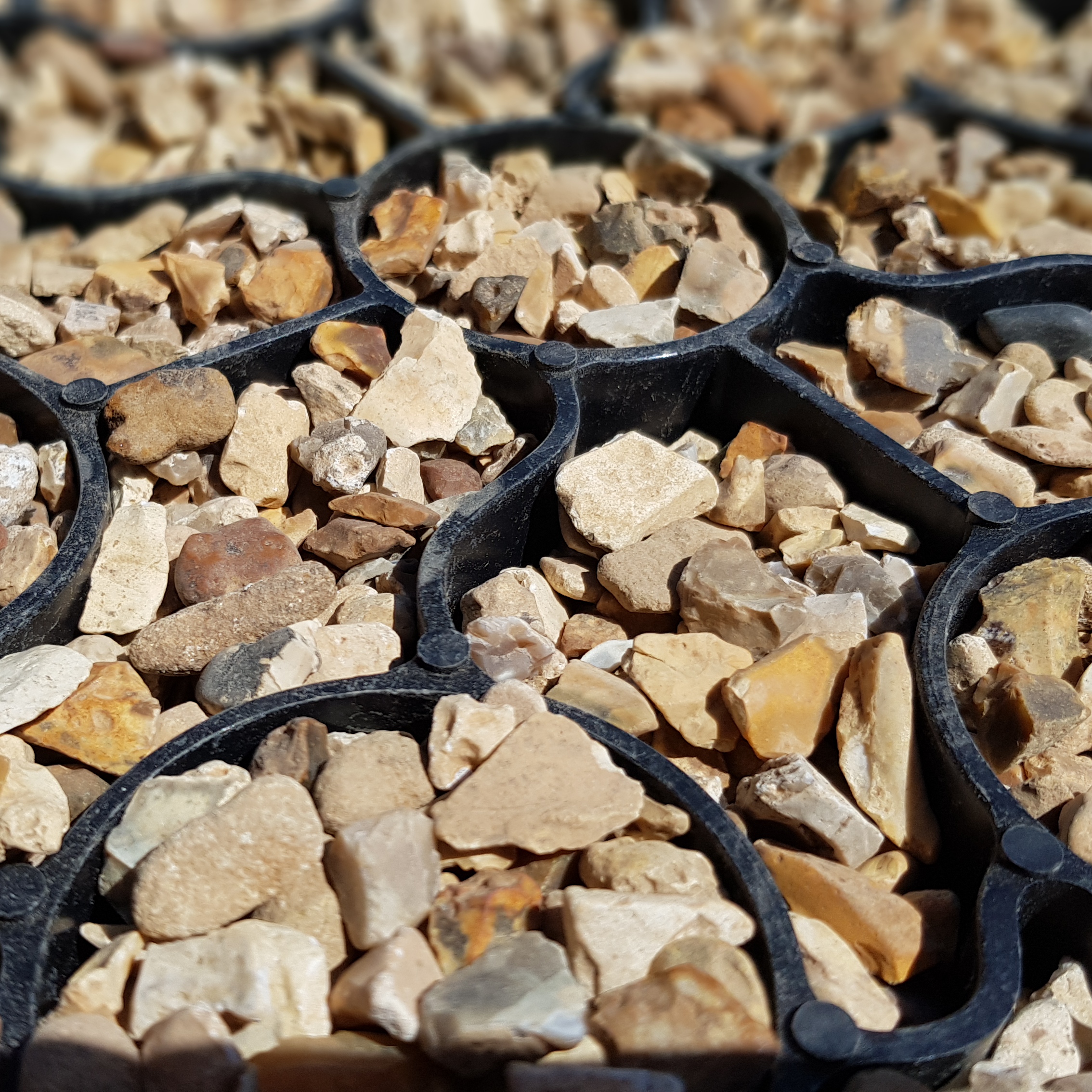
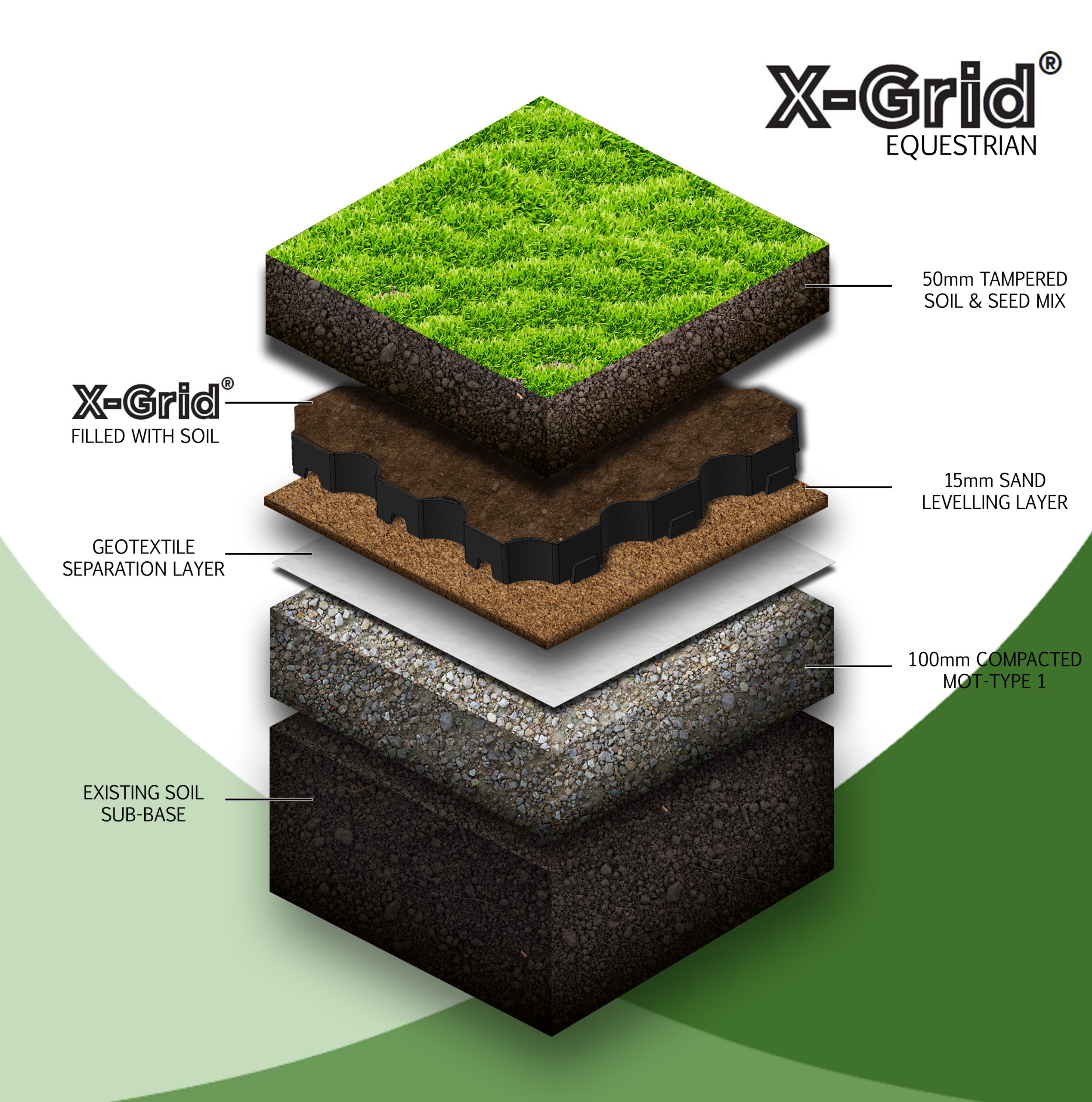
The fill does the visible work. Cells hold clean 10–20 mm angular gravel — or a free-draining rootzone for grass — flush with the top and slightly overfilled. The angular stone keys into the cell walls, so it cannot migrate; the wall takes the wheel load and passes it into the sub-base; and the 93% open structure carries rainwater down as it falls. The panel turns loose stone or bare turf into a surface that is firm underfoot, stable under wheels and permeable end to end.
Tested compression figure
Panel depth
Open structure
Recycled polypropylene
The 428 tonnes per square metre figure is a product compression test result, measured on an unfilled panel — no gravel, no grass — by an independent laboratory following DIN 38412. It demonstrates the panel’s structural strength: the plastic does not collapse under load.
It is not a design bearing capacity. A real surface carries loads through the whole build-up — panel, fill, bedding, sub-base and ground — and the ground underneath is usually the limiting factor. That is why our guidance specifies the sub-base for each traffic type rather than quoting the test figure as a capacity. When comparing products, also check what competitors’ figures actually measure: several are quoted for filled cells, which always tests higher. The testing standards page sets out the difference.
Colour changes how the finished surface reads, not how it performs: all three variants share the identical 330 × 330 × 40 mm panel, the same recycled polypropylene and the same connection.
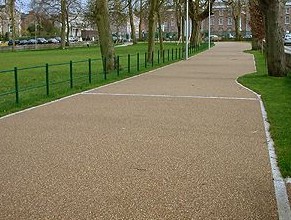
For dark grey and black aggregates and general civil, landscape and parking work. The usual choice for driveways where the stone is the finish.
For pale gravels — limestone, cream and buff stone — where dark cells would show through thin fills and lighten the look of the surface.
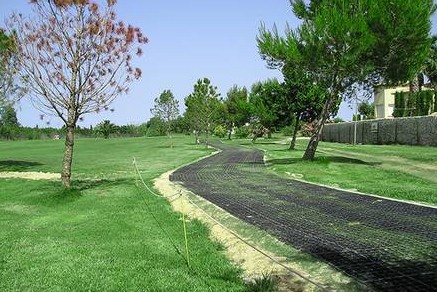
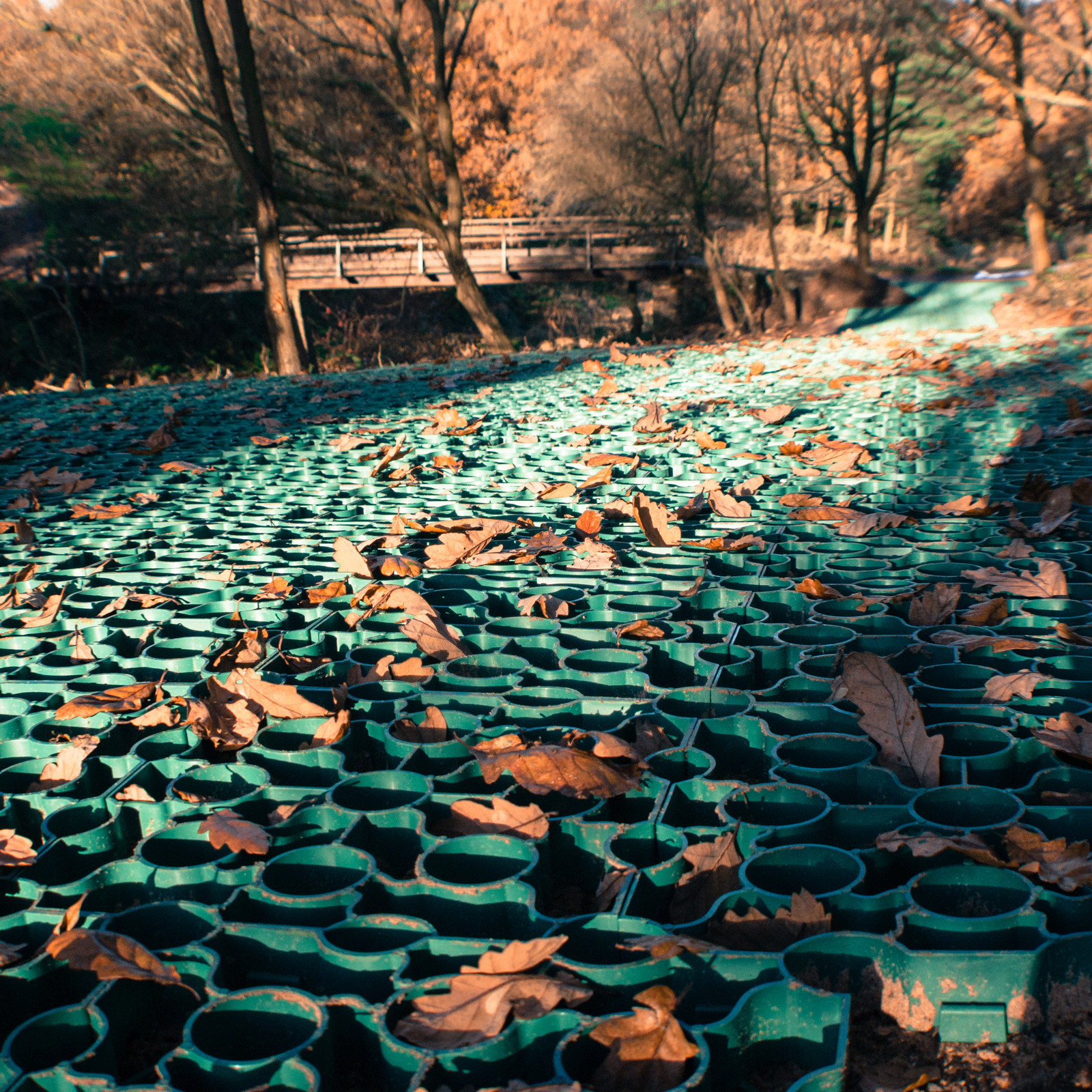
For reinforced grass: the cells disappear beneath soil and seed, leaving a green route that reads as grass and can be mown.
From the X-Grid technical guide
Panel size — nine form a nominal square metre
Depth — the fill depth for gravel or rootzone
Panels per m², each about 0.57 kg
Interlocking connection — no clips or pins to lose
Working temperature range in service
Test method behind the compression figure
Cell wall thickness
Recycled polypropylene, UK-sourced
Materials and manufacture
Every panel is moulded from 100% recycled polypropylene sourced within the UK recycling stream, and manufacture stays in the UK — close to the market the panels serve, with short lead times and an honest transport story. Polypropylene is an inert plastic: it does not rot, does not leach anything into the ground, and shrugs off everything a British winter can do to it. The published working range is −50 °C to +90 °C, so frost, summer surface heat and the freeze–thaw cycles that crack concrete edges are all inside the material’s comfort zone.
In service, the material choice shows up as indifference: panels left stacked in the sun do not distort, ground movement does not corrode them, and a panel lifted for re-laying years later is as serviceable as the day it was moulded. Recycling closes the loop — the panels are made from plastic that already exists, and polypropylene is recyclable again at end of life.
Ordering is deliberately simple. Nine panels cover a square metre and each weighs about 0.57 kg, so the count for any area is square metres × 9: a 40 m² driveway is 360 panels plus a contingency for cuts — thirty or so on a typical layout with edges and obstructions. Two people carry, click and lay the panels without plant, and a driveway-sized area goes down in minutes. That low handling weight is why the grid is as practical a retrofit for a single parking bay as it is a specification for a whole car park.

Panel strength is only one part of a successful surface. Excavation, geotextile, sub-base, bedding, drainage, edge restraint and infill must be designed for the ground and the heaviest expected traffic.
For heavy vehicles, soft ground, slopes, abnormal loading or consequential structures, obtain project-specific technical or engineering approval.