
Made in the UK from 100% recycled polypropylene
Application guidance
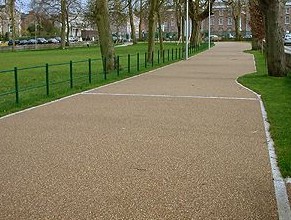
Create practical paths, garden surfaces and suitable bases for lightweight garden structures.
Why it matters
Garden projects fail in two familiar ways: the gravel path that scatters every time it is walked on, and the shed base that starts level and ends tilted as the ground beneath it moves with the weather. Both are the same fault — load on unreinforced ground.
A garden grid fixes both with one product. X-Grid confines path gravel so it stays where it is raked, and builds a free-draining, level platform under sheds, summerhouses and greenhouses that will not pump or subside with the seasons. It is a nine-panels-per-square-metre, hand-laid job — no machinery, no concrete.
panels — a shed base is a morning’s work
open structure — no standing water
Who this guidance is for
For structures, size the platform to the building’s footprint plus an edge — and check the manufacturer’s base requirements before you specify.
Approved build-up guidance
Strip topsoil from the footprint and level the area; light-duty garden work on firm ground needs the least intervention of any application.
A compacted free-draining aggregate layer keeps water moving under the base or path.
A geotextile suppresses weed growth and separates the build-up from the soil.
Nine panels per square metre, laid loose with the slot-and-peg interlock; cuts kept larger than half a panel.
Clean angular gravel — typically 10–20 mm — confined so it stays raked and put.
A regulated, free-draining platform ready for the structure manufacturer’s floor system.
Key facts
panels — a shed base is a morning’s work
open structure — no standing water
wall, 330 × 330 mm cells
recycled, inert polypropylene
Specifying discipline
Straight answers
A level, free-draining platform that will not move with the seasons. X-Grid over a compacted free-draining layer and membrane provides that without concrete; confirm the shed maker’s own base requirements.
Confine it: edge restraint plus a cellular grid keeps angular gravel raked and in place. Ten minutes of raking a season replaces the monthly re-dress.
A geotextile is recommended: it stops weed growth through the surface and keeps the free-draining layer separate from the soil below.
Other applications
Create a stable, permeable gravel driveway with an installation build-up matched to ground and traffic conditions.
Reinforce gravel or grass parking bays, overflow parking and circulation areas with a durable cellular system.
Build permeable access routes for service, maintenance and managed vehicle traffic, with ground and drainage design matched to the project.
Stabilise gateways, yards, tracks and high-wear equestrian areas with appropriate drainage and build-up.
Reinforce farm access, yards and routes where ground conditions and vehicle loading demand a robust design.
Protect buggy routes, maintenance access and overflow areas while respecting the surrounding landscape.
Support campsite pitches, access and parking with permeable grass or gravel surfaces designed for seasonal traffic and site drainage.
Prepare a stable, level and free-draining grid base where the complete installation is designed for the filled load.
An indicative panel count, build-up and material schedule for any application on this site, reviewed by the technical team.
Every build-up above assumes the same published panel data: 330 × 330 mm cells, 40 mm deep, nine panels per square metre, a slot-and-peg interlock and a working range of −50 °C to +90 °C.