
Made in the UK from 100% recycled polypropylene
Application guidance
Stabilise gateways, yards, tracks and high-wear equestrian areas with appropriate drainage and build-up.
Why it matters
Horses concentrate enormous load onto small hooves, and they use the same few metres of ground every day — the gateway, the fence line, the route to the field shelter. Grass gives up first; mud follows, and muddy paddocks mean lost turnout, slipping injuries and stables that never dry.
Equestrian ground reinforcement takes the load off the turf. X-Grid cells — filled with root-zone soil and reseeded, or with gravel in the wettest zones — spread hoof pressure through a designed build-up, while drainage below the grid moves water away instead of letting it pool at the gateway. The published equestrian guidance pairs the grid with correct drainage detail; the grid alone will not save ground that has nowhere to drain.
panels — cover a gateway in minutes
open structure for drainage
Who this guidance is for
Start where the horses start: gateways, water troughs and shelter approaches are the failure points, and the places a grid earns its keep first.
Approved build-up guidance
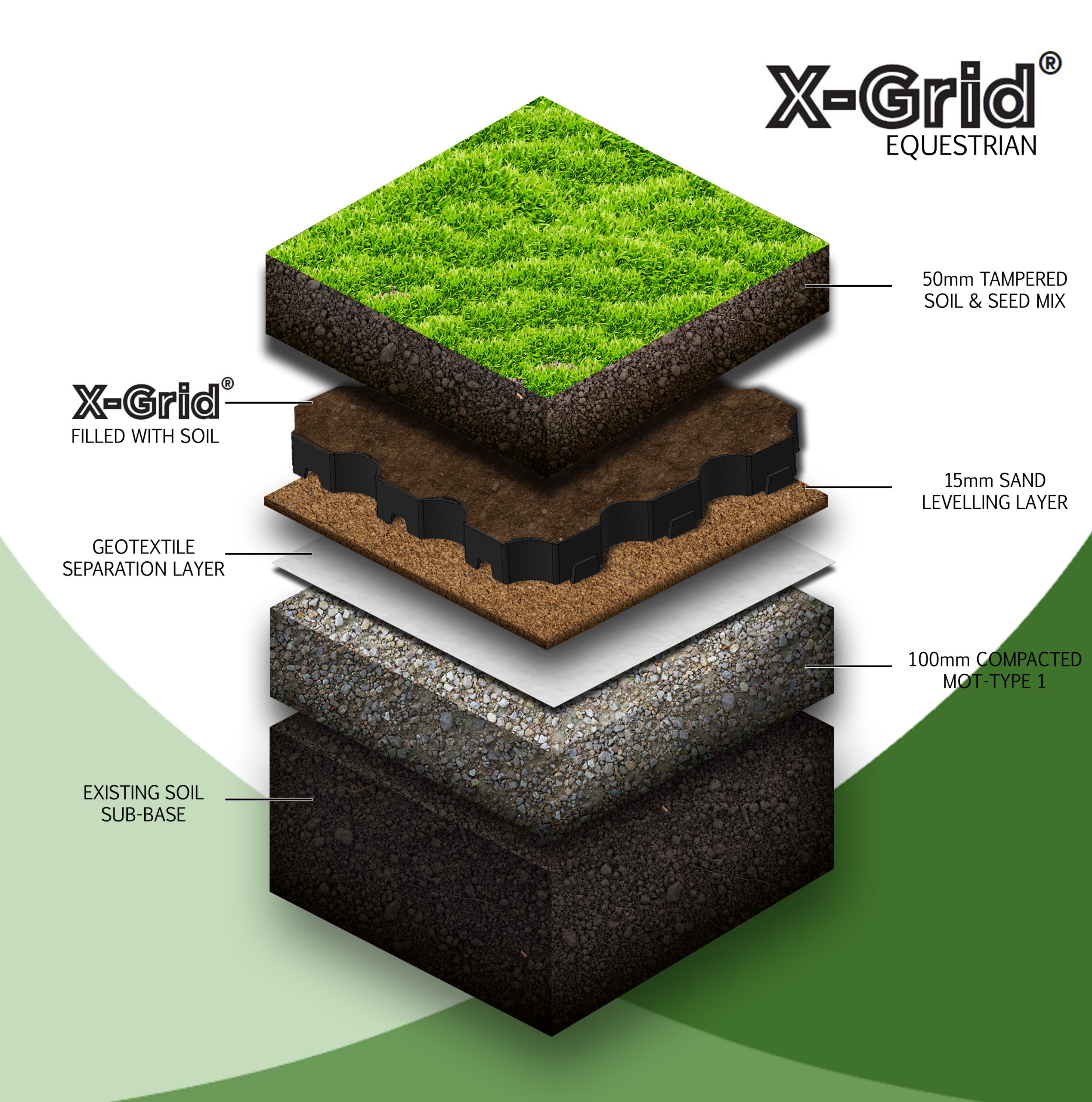
Strip spoiled turf and level the area — the GB Groundworks paddock conversion began by removing undulations and clay pockets that would hold water.
Free-draining stone as the design requires: paddock drainage is decided below the grid, before any surface is laid.
A membrane separates the ground from the build-up and stops the stone disappearing into soft clay.
Sand blinding lets the grid bed into a soft medium and smooths out lumps before the panels land.
Green X-Grid disappears under grass recovery; black suits gravel-surfaced yards and gateways. Interlock the full area.
Soil and seed for grass turnout; clean angular gravel for yards, gateways and the wettest traffic lines.
Key facts
panels — cover a gateway in minutes
open structure for drainage
recycled polypropylene, inert in soil
frost-proof, freeze-thaw stable
Specifying discipline
Installed project
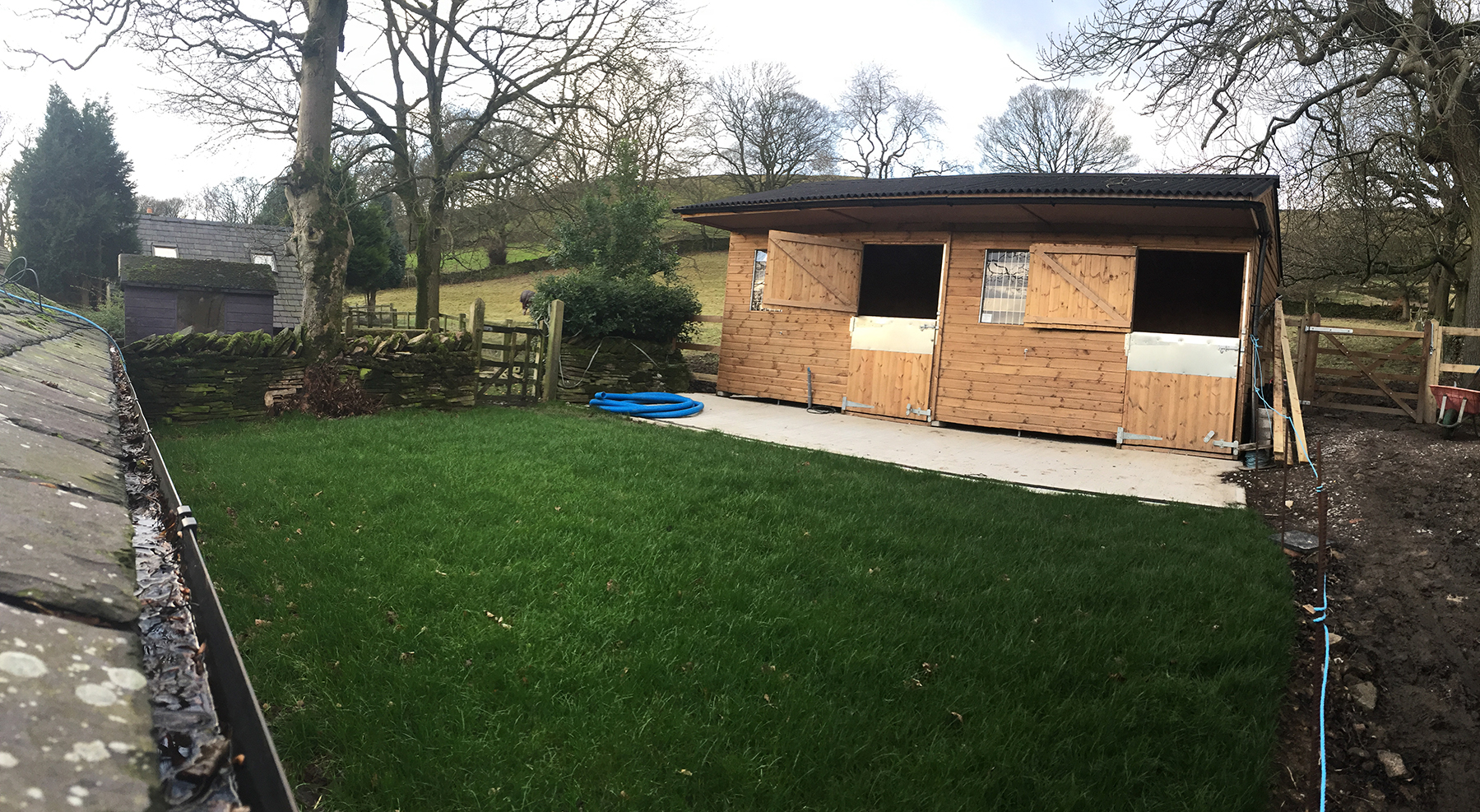
Giles from GB Groundworks converted a paddock that constant equestrian traffic had turned “exceptionally muddy — even boggy” into a stable area: turf off, levels corrected, geotextile and sand blinding, then black X-Grid filled with soil and seed.
Straight answers
A cellular grid on a drained, geotextile-separated build-up. Hoof load spreads through the X-Grid cells instead of punching the surface, and water leaves through the drainage layer below.
Rebuild the gateway as a section, not a patch: levels and drainage, membrane, blinding, grid, then infill. The case-study brochure documents paddock gateways rebuilt in exactly this sequence.
The grid is filled with soil and seeded, so grass grows through the open cells; the panels protect the root zone while it establishes and take the load once it is in wear.
Other applications
Create a stable, permeable gravel driveway with an installation build-up matched to ground and traffic conditions.
Reinforce gravel or grass parking bays, overflow parking and circulation areas with a durable cellular system.
Build permeable access routes for service, maintenance and managed vehicle traffic, with ground and drainage design matched to the project.
Reinforce farm access, yards and routes where ground conditions and vehicle loading demand a robust design.
Protect buggy routes, maintenance access and overflow areas while respecting the surrounding landscape.
Support campsite pitches, access and parking with permeable grass or gravel surfaces designed for seasonal traffic and site drainage.
Create practical paths, garden surfaces and suitable bases for lightweight garden structures.
Prepare a stable, level and free-draining grid base where the complete installation is designed for the filled load.
An indicative panel count, build-up and material schedule for any application on this site, reviewed by the technical team.
Every build-up above assumes the same published panel data: 330 × 330 mm cells, 40 mm deep, nine panels per square metre, a slot-and-peg interlock and a working range of −50 °C to +90 °C.