
Made in the UK from 100% recycled polypropylene
X-Grid solution
X-Grid has a 93% open structure. Effective performance depends on a correctly designed, free-draining sub-base and local ground conditions.
Permeable paving
Traditional sealed surfaces move the rainfall problem downstream: rain that once soaked into the ground runs off tarmac and concrete, gathers oils and silt on the way, and arrives at the drain all at once. Sustainable drainage (SuDS) exists to reverse that — to let water go back into the ground where it falls, slowly and cleaned by the soil it passes through.
An open-cell grid is a simple way to build permeability into a trafficked surface. X-Grid is 93% open structure, so rain passes through the gravel or grass fill immediately — there is no impermeable skin to overwhelm — and into the free-draining construction below. Because the cells confine the fill, the surface can still carry cars, vans and occasional heavy vehicles without the rutting that defeats loose permeable stone.
What the panel supports, the design must deliver. Genuine infiltration depends on the whole build-up: a free-draining sub-base rather than a fines-heavy one, falls that move water away from buildings, and ground underneath that can accept the water, or a designed overflow route where it cannot. Front-of-property surfaces under SuDS rules, yard drainage and landscape schemes all follow the same logic — the drainage page of the installation guide sets out each layer, and unusual ground or outfalls should be designed by an engineer.
Get the details right
Permeability is a chain, and the surface is only its first link. Rain passes through the gravel or grass fill the moment it lands, then into the construction below: a free-draining sub-base — an open-graded, low-fines material rather than one that could clog — over ground that can accept the water, or towards an outfall designed for the surplus. Falls still matter even in a permeable surface, because water that cannot leave the construction is water waiting to soften it, so every design moves surplus rain to a positive outfall.
The grid’s contribution is to keep that chain working under traffic. Because the cells confine the fill, the surface carries cars, vans and occasional heavier vehicles without the rutting and puddle-forming deformation that defeats loose permeable stone, and the 93% open structure means there is no impermeable skin for a cloudburst to overwhelm. Front-of-property driveways under SuDS rules, yard drainage and landscape schemes all follow the same logic: permeable by design, not by hope.
Two checks decide whether a permeable scheme performs. The first is the ground: an infiltration test, or simply a good look at how the site behaves after heavy rain, tells you whether water can leave the construction into the subgrade or whether you are building a tank with an overflow. Both are legitimate designs — but only if you know which one you have built.
The second is the details. Keep silt-bearing surfaces such as unbound approaches from tracking fines onto the finished area, use a geotextile where structural layers could intermix, and check the falls after the first proper rainfall. Unusual ground, high water tables or constrained outfalls belong with an engineer; for everything else, the installation guide sets out each layer in turn, and the technical team will review a proposed build-up before you commit to materials.
In use
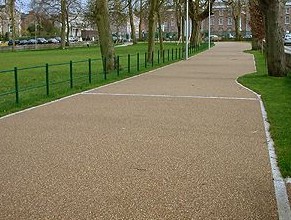
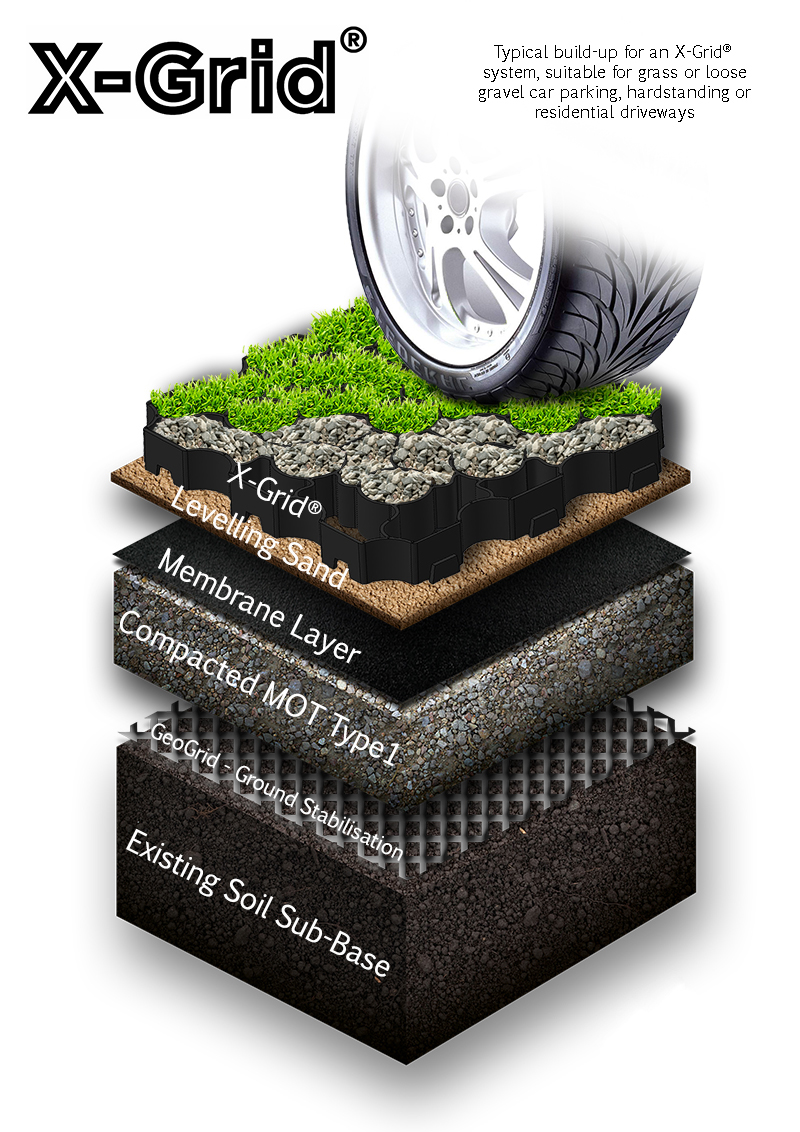
Typical uses include SuDS-conscious external works. The final design must reflect site drainage, subgrade strength, slope and vehicle movements.
Use a permeable gravel or grass finish over a correctly prepared, restrained and permeable construction.